
How to Organize Your Master Closet in 48 Hours
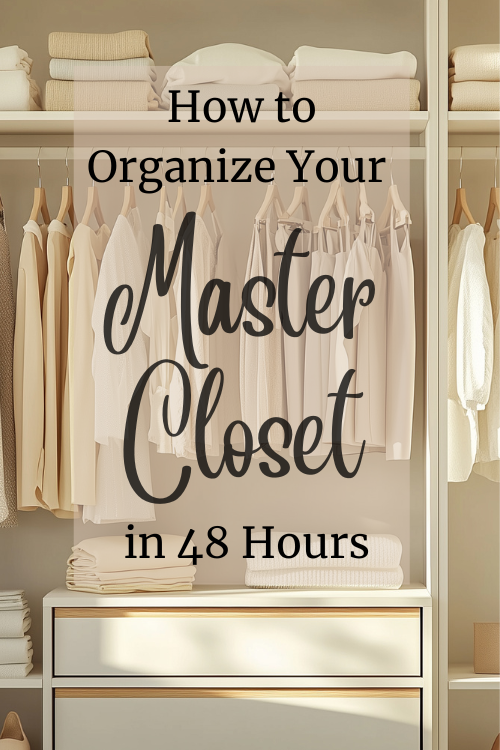
Your master closet should be your favorite room in the house, a peaceful place where getting dressed is easy and everything you need is right there. Instead, it's probably a chaotic jumble of hangers, forgotten clothes, and that one jacket you haven't worn in three years.
If you're struggling to find anything in your closet, getting dressed takes forever, or you feel stressed every time you open the door, you're not alone. In my years as a professional organizer serving Livonia, Novi, Plymouth, and throughout Metro Detroit, I've helped hundreds of clients transform cluttered closets into organized spaces they actually love. And the best part? You can do it yourself in just 48 hours.
This complete guide walks you through my proven 7-step system that I use with my clients. By the end of this weekend, you'll have a functional master closet organization system that actually works.
Why Your Closet Gets Cluttered (And Why It's Not Your Fault)
Before we dive into the steps, let's talk about why closets become cluttered in the first place. Understanding this helps you avoid falling back into old habits.
Most people don't intentionally create messy closets. Life happens. You buy new clothes, seasons change, your body changes, and suddenly you're trying to fit 10 years of fashion into a space designed for maybe 3 years' worth.
The second reason? Decision fatigue. Every morning, you make dozens of decisions, and your closet is one of them; you're already exhausted. This makes it hard to maintain organization, so clothes pile up.
The third reason is a lack of a system. Without a clear structure, designated spots for different types of clothing, a consistent way to hang items, and a regular purging schedule, chaos returns quickly.
The good news? This 48-hour system addresses all three problems. Let's get started.
What You'll Need Before You Begin
Don't get caught in "preparation paralysis." You don't need fancy organizing systems before you start. Here's what you actually need:
Essential:
Large trash bags - (for donations and trash). One labeled "DONATE" (or use a white bag for donations, black bag for actual trash)
2-3 empty boxes or bags labeled "KEEP" - For sorting as you go
Marker or Pen -For labeling
Full-length mirror - To try things on as you decide (you might already have one)
That's it. You'll free up plenty of hangers from the clothes you're donating. You don't need fancy storage containers, shelf dividers, or organizational products yet. Once you've purged and can see exactly what you have left, THEN you'll know what (if anything) you actually need to buy.
Time investment: Block out 6-8 hours on day 1, and 3-4 hours on day 2.
Step 1: Remove Everything (The Hardest Part)
This is the step that stops most people. But trust me, you cannot organize a closet while items are hanging. You need to see what you have.
How to do it:
Clear a large space, your bed, a guest room, or a table ( I have one of those folding tables.)
Remove every single item from your closet. That means hangers, clothes, shoes, everything
Leave the closet completely empty
Wipe down shelves and rods while you have the chance
Why this matters: When everything is out, you see the full picture. You realize you have five white t-shirts that are nearly identical. You spot the three pairs of black pants that no longer fit. You discover clothes you forgot you owned.
Pro tip: Don't be tempted to "reorganize as you go." Getting everything out is step one. Organizing comes next.
Step 2: The Honest Purge (This Is Where Transformation Happens)
Before you organize, you need to eliminate. This is the most important step—and honestly, the hardest one.
Here's why we do this first: There's no point categorizing and organizing 100 items when you're going to donate 30-50 of them anyway. Get the excess out of the way, and you'll have a much clearer picture of what you're actually working with.
Ask yourself these hard questions for every single item:
Do I wear this? If you haven't worn it in the last year (and the season has cycled through), you probably won’t. Be honest.
Does it fit? Keep clothes that fit NOW. Not "when I lose 10 pounds." Not "someday." Keep what fits today.
Do I love it? If you feel "meh" about it, let it go. Your closet should contain clothes you're excited to wear.
Does it match anything? Orphan pieces- that shirt that goes with nothing else- take up valuable space without adding value.
Is it in good condition? Stained, pilled, ripped, or broken items belong in the trash, not your closet.
Real talk: Most of my clients in Livonia, Novi, and throughout Metro Detroit tell me purging is the hardest part. They feel guilty about clothes they paid money for but never wear. Here's the truth: keeping that guilt-ridden item in your closet doesn't give you your money back. It just takes up space and reminds you daily that you made a purchase you regret.
Let it go. Use it as a learning experience for future purchases.
Create three piles as you decide:
Keep: Items you wear regularly and genuinely love
Donate: Items that don't fit, are damaged, or you don't love
Trash: Anything that's unwearable
How much should you get rid of? Aim to eliminate 30-50% of what you started with. Yes, that sounds drastic. But a smaller wardrobe of items you love is infinitely better than a large wardrobe full of clothes you tolerate.
Step 3: Sort What's Left Into Clear Categories
Now that you've eliminated the excess, organizing is easy. You're working with a much smaller, more manageable amount of clothing.
Create these categories with what remains:
Everyday wear (jeans, casual tops, everyday pants)
Work/Professional (business casual, suits, professional dresses)
Activewear (workout clothes, athletic wear)
Pajamas and sleepwear
Seasonal items (winter coats, summer dresses—you'll store these separately)
Accessories (belts, scarves, hats)
Shoes (flats, heels, sneakers, boots)
Special occasion (dresses for events, formal wear)
Why this works: Now that you've purged, sorting by category is much faster. You can clearly see whether you have too many everyday tops or are missing work blazers. You'll spot duplicates easily. Most people discover they wear about 20% of their closet 80% of the time, and now you can see exactly which pieces make up that 20%.
Step 4: Organize by Category and Create Zones
Now that you have only items you love and wear, it's time to organize strategically.
Create zones in your closet:
Top section (high shelves): Off-season items in labeled bins, rarely worn special occasion wear
Hanging rod 1 (eye level): Everyday wear, items you wear 3+ times per week
Hanging rod 2 (if you have it): Work clothes or less frequently worn items
Lower shelves: Folded sweaters, jeans, pants, organized by color
Floor/bottom shelf: Shoes, organized by type and color
Door/side space: Belts, scarves, or accessories
The key principle: Items you wear most frequently should be at eye level and easily accessible. Items you wear rarely (seasonal, special occasion) go higher up or in the back.
Organization methods that work:
By color: All whites together, all blacks together, etc. This is visually calming and makes outfit coordination easier.
By type: All pants together, all tops together. Helps you see what you have.
By frequency: Most-worn items front and center, less-worn items toward the back.
Choose the method that makes sense to you. There's no "right" way, only what works for YOUR life.
Step 5: Use Proper Hanging and Folding Techniques
How you hang and fold clothes dramatically impacts whether your closet stays organized.
For hanging items:
Use matching hangers (this alone transforms how a closet looks)
Hang similar items together
Turn hanging items so the hooks all face the same direction—it looks intentional and organized
Use cascading hangers or hanging organizers for tanks, camis, or scarves
Don't double-hang unless you have no choice
For folded items:
Use the KonMari fold method or the file-folding method (stand items upright so you can see everything at a glance)
Fold items so they can stand vertically in drawers or shelves. This prevents the "closet avalanche" when you pull one item
Stack folded items no more than 4-5 high to prevent collapse and maintain visibility
For shoes:
Clear shoe boxes or a shoe organizer rack are game-changers
Arrange by category (everyday, work, formal, athletic), then by color
If storing in boxes, take a photo of the shoe and tape it to the box
Step 6: Arrange and Style Your Space
Now comes the satisfying part, actually arranging everything in your organized closet.
Physical arrangement:
Start with the easiest category (maybe shoes or belts)
Place high-shelf items first (off-season storage)
Arrange hanging items next
Fill shelves with folded items
Organize shoes last
Make it pretty:
Coordinate hanger colors
Use matching storage bins in coordinating colors
Add a small decorative element if you have space
Ensure lighting is good. Add a small LED light strip if needed
Keep items clean and in good condition
This is your space. It should feel peaceful and organized, not sterile and cold.
Step 7: Create a Maintenance System (The Secret to Long-Term Success)
Here's what most people miss: organizing your closet is easy. Keeping it organized is the real challenge.
Weekly maintenance (5 minutes):
Put items back immediately after wearing
Don't let clean clothes pile up on a chair
Return hangers to hang in the correct direction
Monthly maintenance (15 minutes):
Do a quick "reset". Realign hangers, straighten shelves
Notice any items that have migrated to the wrong spot
Rehang off-season items if needed
Seasonal maintenance (30 minutes every 3 months):
Rotate seasonal items
Remove items you didn't wear that season
Update your bins and assess if you need different storage solutions
Annual closet refresh (1-2 hours):
Do a complete closet assessment
Purge items that are worn out or no longer fit
Consider your lifestyle changes (new job, new activities, climate changes)
Reorganize if needed
The key to success? Don't wait until your closet is completely chaotic again to do maintenance. Small, consistent effort prevents big problems.
Common Mistakes to Avoid
Keeping "someday" clothes: That blazer you'll wear "when you lose weight" or those jeans for "the summer you get fit". They take up valuable space and create guilt. Keep clothes for your life NOW.
Not using all your vertical space: Most closets have wasted space above hanging rods or on upper shelves. Use this for storage bins or high shelves.
Buying expensive organizational systems before you purge: Before you invest in fancy containers, purge. You might discover you have less stuff than you think and don't need as many solutions.
Organizing by color in a way that doesn't match your lifestyle: If you're a casual person, organizing by color looks nice but might not be functional. Choose a system that matches how you actually get dressed.
Forgetting about lighting: A poorly lit closet is impossible to keep organized because you can't see what you have. Add lighting if needed.
Final Thoughts: You've Got This
Organizing your master closet in 48 hours might sound impossible, but thousands of clients in Livonia, Novi, Plymouth, Warren, and throughout Metro Detroit have done it, and you can too.
Remember: the goal isn't to have a "perfect" closet that looks like a magazine. The goal is to have a functional closet where you can find what you need, get dressed without stress, and feel good about the space.
Your closet is the first thing you see in the morning and the last place you visit before bed. It deserves to be organized in a way that makes you happy.
Ready for Extra Support?
Organizing your closet solo is absolutely doable with this guide. But if you're feeling overwhelmed, whether it's the purging stage, dealing with stubborn clothing items, or you simply want expert help. I'm here.
Download the free Master Closet Organization Checklist to track your progress through all 7 steps. Download here
Or, if you'd prefer a professional to guide you through the process, book a free 30-minute consultation. We can discuss your specific closet layout, talk through any challenges you're facing, and create a customized organization plan.
FAQ About Master Closet Organization
Q: What if my closet is very small? A: Small closets require strategic decisions. Prioritize items you wear regularly, and store off-season items elsewhere (under the bed, in a guest closet, or in off-site storage). Double-hanging rods and vertical storage become your best friends.
Q: How often should I redo my closet? A: After the initial 48-hour overhaul, maintenance is key. A quick reset monthly and a deeper refresh seasonally keep things in check. A full reorganization once a year is typical.
Q: What should I do with the clothes I'm donating? A: Donate to local charities (Goodwill, Salvation Army, local shelters) or give to friends. This is the fastest, easiest option. Selling online (Facebook Marketplace, Poshmark, ThredUP) only makes sense if: the item is designer, high-end, or barely worn AND you're willing to list it within 2 weeks. Otherwise, the time investment isn't worth it. Don't let "to be sold" items sit in your home. That’s just creating new clutter.
Q: How do I organize if my household has different styles? A: Each person gets their own zone in the closet if it's a shared space. Create clear boundaries so one person's items don't overflow into the other's space.
Q: What's the best way to store off-season items? A: Use labeled bins stored on high shelves. Make sure bins are transparent or labeled so you know exactly what's inside. Add cedar blocks to prevent moths.
Questions about organizing your home? I'd love to help. DM me or reply in the comments below.